Curriculum Overview
Curriculum Intent at East Crompton St George’s
At East Crompton St George’s CE Primary school the curriculum is specifically tailored to meet the needs of our children – academically, spiritually, socially and in their knowledge of the World. We aim to offer our children the best educational experience possible in order to prepare them fully for the lives they are going to lead. All young people are individuals and our curriculum recognises this, striving to overcome any barriers to enable all individuals to achieve their full potential. We want our curriculum to be engaging and informing so that children are motivated, curious and inspired, enabling them to become life long learners. It should promote in children a self-belief, self-confidence and provide opportunities for children to develop resilience, skills and a breadth of knowledge across all subject areas.
Our curriculum extends beyond the formal requirement of the National Curriculum as we recognise that this is only part of what our children require. Of paramount importance within our curriculum are the values, skills and abilities we feel our children will require in order to take their place in the world as a global citizen. These will enable our children to be compassionate, resilient and driven leaders of the future, who hold strong Christian values, so that our young people develop imagination; creativity and insight; are able to reflect on their learning, their experiences and their lives; can find deeper meaning, a sense of purpose and inner peace.
Our curriculum is designed to provide rich and varied learning experiences to meet the needs, interests and aspirations of all learners, within and beyond the school day. It is underpinned by a clear whole school vision within our Mission Statement and a set of key principles.
Key Principles:
- Breadth of Experience
- Resilient Learners
- Socially Responsible
- Vocabulary Rich
- Rich in Spiritual, moral and cultural learning
Curriculum Implementation
The curriculum at East Crompton St George’s is based on high quality teaching that leads to long-term learning using the National Curriculum content. We have identified key concepts which form the spine of our curriculum. Each individual subject holds its own importance, and the integrity of that subject is upheld through careful planning and learning opportunities. Links are made across some carefully thought-out themes which support the development of children’s long-term learning without compromising the importance of individual subjects. The concepts are explored in a wide breadth of topics across KS1 and KS2. By revisiting the same concepts over time and across themes children gradually build a deeper understanding of them. Our learning is organised so that all year groups have learning that is organised under a key question. Subjects are taught explicitly but where possible links are made so children make connections within a topic as well as linking understanding to prior learning and build a sense of excitement and anticipation for future learning.
Curriculum Impact
The impact of the curriculum is monitored though triangulation of outcomes: pupil voice, test/data outcomes, planning, monitoring of books and displays, lesson learning walks, discussions with teaching staff, pupils and parents / carers. This monitoring is driven by leaders and subject leaders.
Pupils, parents and staff are consistently and regularly consulted about the curriculum and the impact that it makes.
The desired outcomes of the curriculum will ensure that pupils are well rounded students, ready to embark on high school education. They will be equipped with the foundations and skills to achieve success in later education. Pupils will understand what they are good at and have developed skills to face their challenges.
Phonics/Reading
Phonics is taught using Ruth Miskin’s Read Write Inc. (RWI) programme, a structured and systematic approach that provides children with the essential foundations for reading and writing success.
Through daily phonics lessons, children are taught to recognise sounds, blend sounds together to read words, and segment words for spelling. The programme follows a carefully sequenced progression, enabling pupils to build their phonics knowledge and reading fluency step by step. Children learn new sounds, practise previously taught sounds and develop increasing confidence in applying these skills in both their reading and writing.
Pupils are assessed regularly and grouped according to their phonics knowledge, ensuring that teaching is closely matched to their individual stage of development. This enables all children to make strong progress and receive the support or challenge they need to succeed.
Reading is at the heart of the Read Write Inc. programme. Children regularly read carefully matched phonically decodable books, helping them to apply their phonics knowledge successfully while developing accuracy, fluency and comprehension. Re-reading familiar texts allows pupils to build confidence and develop a love of reading.
Alongside phonics, children are taught to develop a rich vocabulary and strong language skills through discussion, storytelling and exposure to high-quality texts. Parents and carers are encouraged to support reading at home, working in partnership with the school to help children become successful readers.
Through our phonics curriculum, we aim for all children to develop the skills, confidence and enthusiasm needed to become fluent readers and writers, providing a strong foundation for future learning across the curriculum.
English Reading/Writing
We are committed to developing confident, enthusiastic readers and writers through a rich and engaging English curriculum. Reading and Writing are taught through bespoke planning from Roots and Wings, carefully designed around high-quality whole-class texts that inspire curiosity, creativity and a love of literature.
Our text-driven approach enables children to immerse themselves in a wide range of fiction, non-fiction and poetry, exposing them to ambitious vocabulary, rich language structures and diverse themes. Through shared reading, discussion and analysis, pupils develop strong comprehension skills and a deep understanding of how authors craft meaning.
Writing is closely linked to the texts being studied, providing meaningful contexts and real purposes for writing. Children explore key grammatical concepts, sentence structures and language choices within authentic examples before applying these skills independently in their own writing. This approach supports pupils in becoming confident writers who can write effectively for a range of audiences and purposes.
Reading is prioritised throughout the school. Pupils participate in daily reading lessons that focus on vocabulary, fluency, comprehension and critical thinking. High-quality texts are used to broaden children’s experiences, deepen their understanding of the world and nurture a lifelong enjoyment of reading.
Speaking and listening opportunities are woven throughout the curriculum, enabling pupils to articulate their ideas, discuss texts thoughtfully and develop their confidence as communicators.
Through our English curriculum, we aim to ensure that all children leave East Crompton St George’s as skilled readers, thoughtful writers and effective communicators, equipped with the knowledge and confidence to succeed in the next stage of their education and beyond.
Mathematics
At East Crompton St George’s CE Primary School, we aim to develop confident, resilient and enthusiastic mathematicians who are able to use their mathematical knowledge and skills effectively in a range of contexts. Mathematics is taught through the White Rose Maths scheme, which is implemented consistently across the school to ensure a clear progression of knowledge and skills from Early Years through to Year 6.
Our mastery approach encourages children to develop a deep understanding of mathematical concepts by exploring ideas in depth before moving on. Lessons are carefully structured to build upon prior learning, enabling pupils to make meaningful connections and develop fluency, reasoning and problem-solving skills.
To support long-term retention and strengthen recall of key mathematical facts and concepts, lessons incorporate Flashback 4 activities. These retrieval tasks revisit previous learning, helping pupils to secure knowledge in their long-term memory and identify any misconceptions. Children are also regularly challenged through True or False questions, which encourage them to explain, justify and prove their thinking. This focus on mathematical reasoning helps pupils develop confidence in discussing mathematics and understanding that there can be multiple ways to approach a problem.
Concrete resources, pictorial representations and abstract methods are used throughout the curriculum to ensure all pupils can access and understand mathematical concepts. Teachers use careful questioning and discussion to deepen understanding, challenge misconceptions and encourage pupils to think critically about mathematics.
Through our mathematics curriculum, we strive to nurture a positive attitude towards mathematics, enabling all children to become fluent, reflective and successful mathematicians who are well prepared for the next stage of their education and everyday life.
RE
The RE syllabus followed at EC St. George’s CE Primary School is a revision of ‘Questful RE’ the Blackburn Diocesan Board of Education RE syllabus 2013.
Blackburn Diocesan Board of Education believes that the high-quality Religious Education (RE) delivered in our Church schools is the key to enabling every child to flourish. We are committed to producing quality resources that will provide our teachers with the knowledge and skills they need to ensure that the children experience the best RE curriculum. Quality RE has the potential, more than any other subject, to have the most powerful and lasting effect on the child’s heart and mind. It is a subject that combines academic rigour with the development of the character and spirit of the child. RE provides opportunities for spiritual development and personal reflection. It develops children’s knowledge and understanding of the nature of religion and belief, it provokes challenging questions about meaning and purpose, truth and values, identity and belonging. RE prepares children for citizenship in today’s diverse society. It enables them to develop sensitivity to, and respect for others. Quality RE breaks down barriers and builds communities. At its best RE offers pupils authentic encounters with living faith communities equipping them with the ability to hold an informed conversation about religious beliefs and practices.
Information from The Blackburn Diocesan Board of Education
Wider Subjects
Science
We are committed to developing curious, inquisitive and knowledgeable scientists who are eager to explore and understand the world around them. Our science curriculum is delivered through Grammarsaurus planning, which has been carefully adapted to meet the specific needs, interests and context of our pupils.
Our curriculum provides a broad and balanced science education that develops both substantive scientific knowledge and disciplinary skills across the disciplines of biology, chemistry and physics. Lessons are designed to build progressively upon prior learning, enabling pupils to make meaningful connections and develop a secure understanding of key scientific concepts over time.
Working scientifically is at the heart of science teaching at St George’s. Pupils are encouraged to ask questions, make predictions, plan and carry out investigations, observe changes, gather and interpret data, and draw evidence-based conclusions. Through practical and hands-on learning experiences, children develop enquiry skills and learn how scientific knowledge is established and refined.
Teachers adapt learning to ensure that all pupils can access and succeed within the curriculum while providing opportunities for challenge and deeper thinking. Scientific vocabulary is explicitly taught and revisited regularly, enabling children to communicate their understanding accurately and confidently.
Where possible, science learning is linked to real-life contexts and the wider curriculum, helping pupils to recognise the relevance of science in their everyday lives and future careers. Through engaging lessons and practical investigations, we aim to foster a sense of wonder about the natural world and inspire children to become reflective, resilient and enthusiastic learners.
Through our science curriculum, pupils leave East Crompton St George’s with the knowledge, skills and curiosity needed to continue their scientific journey and to understand the role science plays in shaping our world.
Computing
Our Computing curriculum is delivered through the Purple Mash scheme of work, which has been carefully adapted to meet the needs, interests and prior experiences of our children.
The curriculum provides a progressive programme of study that develops pupils’ understanding across the three key strands of Computing: Computer Science, Information Technology and Digital Literacy. Learning is carefully sequenced to build upon prior knowledge, ensuring that pupils develop their skills and understanding as they move through the school.
Through engaging and practical lessons, children learn how computers and digital systems work, develop coding and problem-solving skills, and become confident users of a range of software and digital tools. Pupils are encouraged to think logically, work creatively and apply computational thinking to solve problems and create digital content.
Online safety is a central part of our Computing curriculum. Children are taught how to use technology safely, responsibly and respectfully, enabling them to make informed decisions when navigating the online world. Key e-safety messages are revisited regularly throughout the year to ensure pupils understand how to protect themselves and others online.
Teachers adapt the Purple Mash curriculum to ensure learning is relevant, engaging and accessible for all pupils. Opportunities are provided for children to develop independence, collaboration and resilience while using technology across a range of contexts and subjects.
Through our Computing curriculum, we aim to inspire pupils to become confident, responsible and creative digital citizens, preparing them for the next stage of their education and for life in an ever-evolving technological society.
PSHE
Our PSHE curriculum is delivered through the Kapow Primary scheme, which provides a progressive and comprehensive programme of learning from Early Years through to Year 6.
PSHE lessons help pupils develop the knowledge, skills and attributes they need to manage their lives now and in the future. Through engaging and age-appropriate learning experiences, children explore key themes such as mental and physical wellbeing, healthy relationships, personal safety, identity, citizenship and economic wellbeing.
The Kapow curriculum is carefully sequenced to build upon prior learning, ensuring that pupils revisit and deepen their understanding of important concepts as they move through the school. Lessons encourage discussion, reflection and critical thinking, enabling children to consider different perspectives and develop empathy, resilience and emotional intelligence.
A strong emphasis is placed on creating a safe and supportive environment where pupils feel confident sharing their thoughts and opinions. Through collaborative activities, role play, debate and problem-solving opportunities, children learn how to communicate effectively, build positive relationships and make informed choices.
Our PSHE curriculum reflects the school’s Christian values and ethos, promoting respect, kindness, responsibility and inclusivity. It also supports pupils in understanding their role within their local community and the wider world, preparing them to become active and responsible citizens.
Through high-quality PSHE education, we aim to equip all pupils with the knowledge, confidence and life skills needed to thrive academically, socially and emotionally, both during their time at East Crompton St George’s and beyond.
PE
At East Crompton St George’s CE Primary School, we believe that high-quality Physical Education is essential in promoting healthy lifestyles, physical competence and positive wellbeing. Our PE curriculum is delivered through the Get Set 4 PE scheme, which provides a progressive and inclusive programme of learning for all pupils from Early Years through to Year 6.
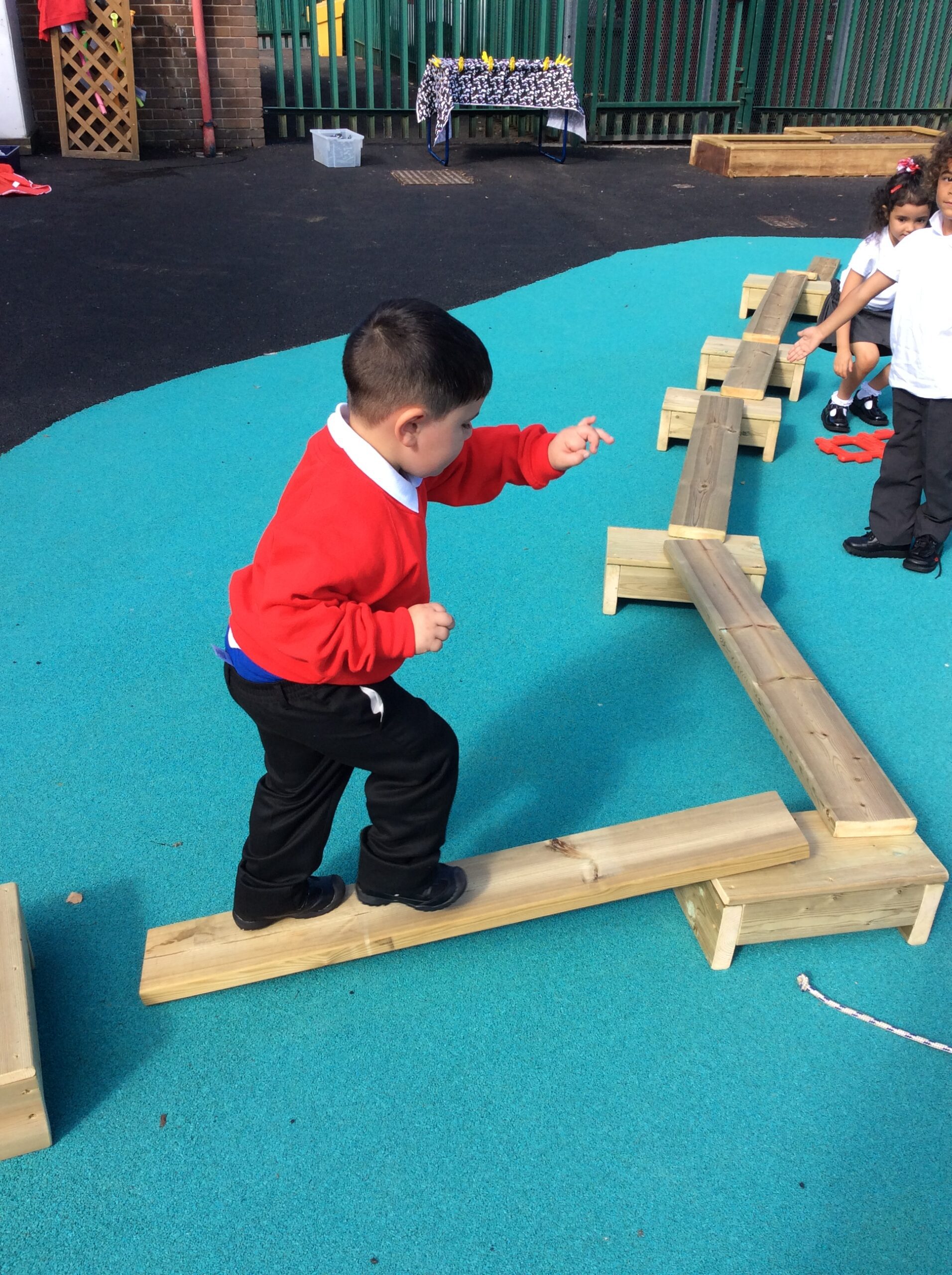
The curriculum is carefully sequenced to ensure that children develop the knowledge, skills and understanding required to participate successfully in a wide range of physical activities. Through engaging lessons, pupils build fundamental movement skills, coordination, balance, agility and confidence, providing the foundation for lifelong participation in physical activity.
Using the Get Set 4 PE scheme, children experience a broad range of sports and activities, including games, gymnastics, dance, athletics, outdoor and adventurous activities, and swimming. Lessons focus not only on developing physical skills but also on fostering important personal qualities such as teamwork, resilience, determination, leadership and sportsmanship.
Teachers use clear modelling, progressive skill development and regular opportunities for practice to ensure all pupils can achieve success and make progress. Lessons are inclusive and adapted to meet the needs of individual learners, enabling every child to participate fully and develop confidence in their physical abilities.
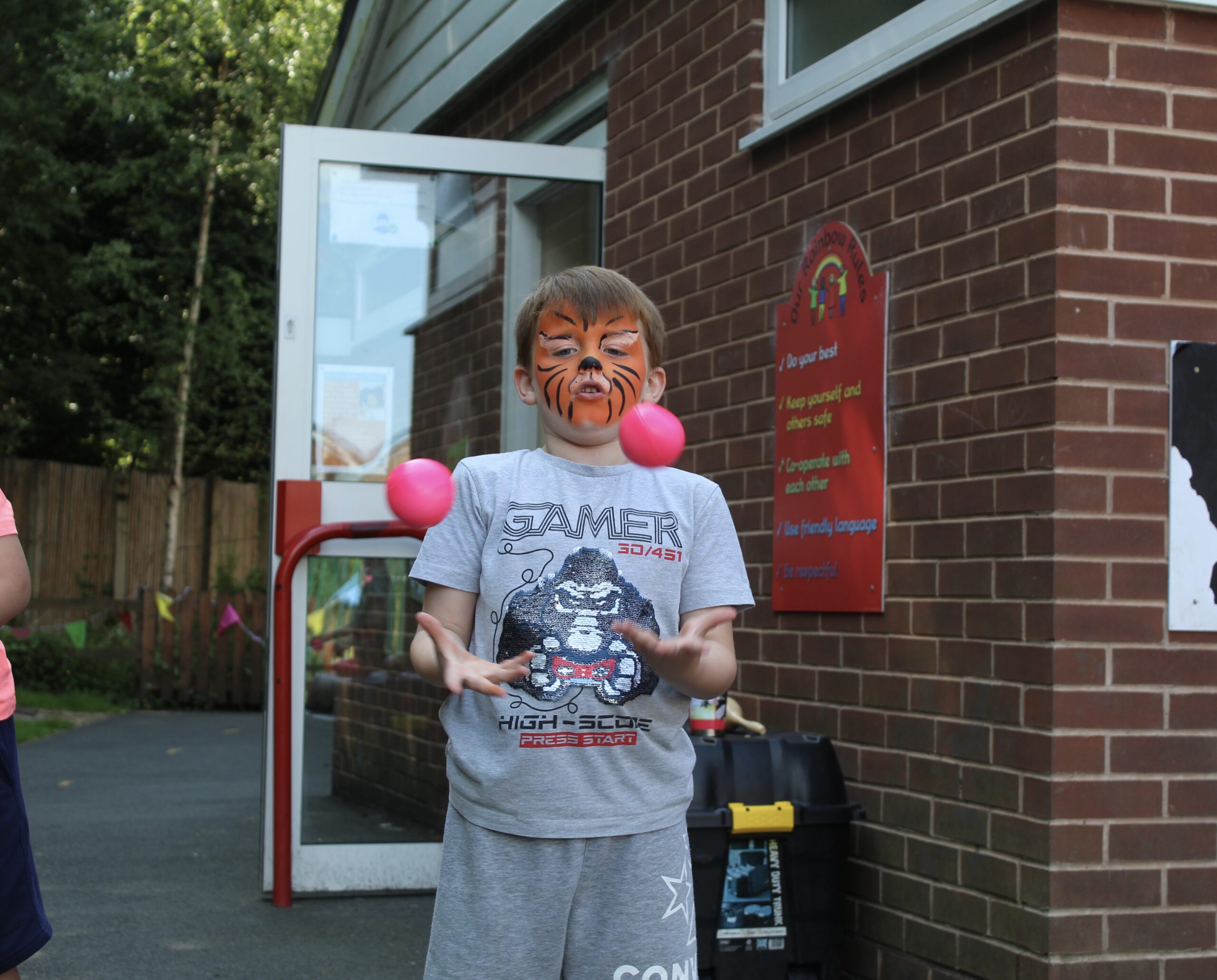
Physical activity is valued across the school day, with opportunities for children to be active beyond PE lessons through playtimes, clubs, competitions and wider sporting experiences. We encourage pupils to understand the importance of exercise, healthy lifestyles and personal wellbeing, helping them to make positive choices both now and in the future.
Through our PE curriculum, we aim to inspire all children to enjoy being active, develop a positive attitude towards physical activity and leave East Crompton St George’s with the skills, confidence and motivation to lead healthy, active lives.
Modern Foreign Languages (MFL)
Modern Foreign Languages are taught through the Kapow Primary Languages Scheme, which is carefully adapted to meet the needs, interests and prior experiences of our pupils. Through engaging and progressive lessons, children develop their speaking, listening, reading and writing skills in a foreign language while gaining an appreciation of different cultures and traditions.
Our curriculum is designed to build vocabulary and language knowledge progressively, enabling pupils to communicate with increasing confidence and accuracy. Lessons incorporate songs, games, stories, role play and interactive activities to make language learning enjoyable and memorable. Pupils are encouraged to practise pronunciation, develop conversational skills and apply their learning in a variety of real-life contexts.
By the end of Key Stage 2, children will have developed a secure foundation in language learning, fostering curiosity about the wider world and preparing them for further language study in secondary education. The teaching of MFL at St George’s promotes cultural awareness, confidence in communication and a lifelong interest in languages.
Music
At St George’s Primary School, music is taught through the Charanga Scheme of Work. Through a broad and engaging curriculum, children develop their musical knowledge, skills and understanding while fostering a lifelong appreciation of music.
Lessons provide opportunities for pupils to listen to and appraise a wide range of musical styles and genres, sing with confidence, play tuned and untuned instruments, compose their own music and perform both individually and as part of a group. Music learning is progressive, enabling children to build upon prior knowledge and develop their skills in rhythm, pitch, pulse, notation and performance over time.
Children are encouraged to express themselves creatively, work collaboratively and develop confidence through regular opportunities to perform and share their learning. Music also supports the development of wider skills, including concentration, resilience, teamwork and self-expression.
By the end of their time at St George’s, pupils will have developed a secure understanding of the interrelated dimensions of music and gained the confidence and enthusiasm to participate in and enjoy music both within school and beyond.
Art/DT
Art and Design Technology are taught through the Kapow Scheme of Work, which is carefully adapted to meet the needs, interests and experiences of our pupils. Our creative curriculum provides children with opportunities to explore, design, create, evaluate and develop practical skills while encouraging imagination, innovation and self-expression.
In Art, pupils study a range of artists, designers and craftspeople from different cultures and time periods. They develop their knowledge and skills across drawing, painting, sculpture, printing and mixed media, learning how to experiment with different techniques and materials to create purposeful outcomes. Children are encouraged to reflect on and evaluate their own work and the work of others, using artistic vocabulary with increasing confidence.
In Design Technology, pupils engage in a range of projects that develop their ability to design, make and evaluate products for specific purposes and users. They learn key skills in structures, mechanisms, textiles, food technology and electrical systems, while applying their knowledge from other curriculum areas, including science, mathematics and computing. Children are encouraged to solve problems creatively, take risks and refine their ideas throughout the design process.
Through both subjects, pupils develop creativity, resilience, critical thinking and practical skills. By the end of their time at St George’s, children will have built a strong foundation of artistic and technical knowledge, enabling them to express ideas confidently and become innovative, reflective learners.
East Crompton St George’s CE Primary School is proud to be part of the Cranmer Education Trust
Cranmer Education Trust is a company limited by guarantee and an exempt charity registered in England. Company registration number: 07687709. Registered Office: Cranmer Education Trust, c/o The Blue Coat School, Egerton Street, Oldham OL1 3SQ. The website address is www.cranmereducationtrust.com and the phone number 0161 785 5082.